
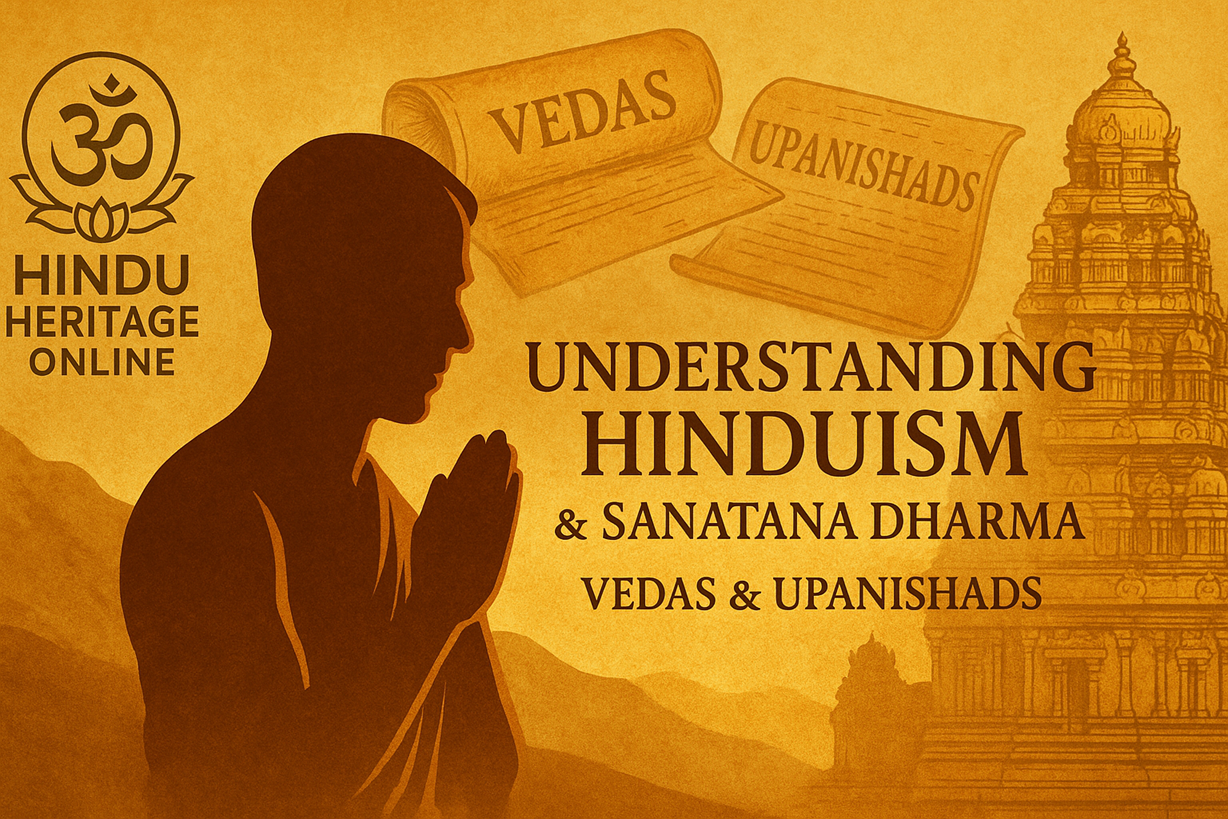
Understanding Hinduism and Sanatana Dharma
Hinduism and Sanatana Dharma: Understanding the Eternal Truth of Ancient Wisdom
In our rapidly evolving world, where modern challenges test our values daily, there exists an ancient wellspring of wisdom that has guided humanity for millennia. Hinduism and Sanatana Dharma represent not merely a religion, but a comprehensive way of life rooted in eternal truths that transcend time, geography, and cultural boundaries.
What is Sanatana Dharma?
Sanatana Dharma, literally meaning “eternal dharma” or “eternal truth,” encompasses the timeless spiritual principles that form the foundation of what the world commonly knows as Hinduism. Unlike religions with specific founders or fixed doctrines, Sanatana Dharma represents an ever-flowing river of wisdom that has evolved through divine revelations, spiritual experiences, and profound philosophical insights spanning thousands of years.
The term “Hindu” itself is geographical in origin, derived from the Sindhu River, and was used by ancient Persians to describe the people living beyond this river. However, practitioners themselves have always referred to their spiritual path as Sanatana Dharma – the eternal way of righteousness that governs both individual conduct and cosmic order.
Core Principles of Sanatana Dharma
1. Dharma (Righteous Duty) Dharma represents the moral and ethical foundation that upholds both individual character and societal harmony. It encompasses duty, righteousness, and the natural order that sustains the universe. As a mentor, I often emphasize that understanding one’s dharma is crucial for both personal fulfillment and professional success.
2. Karma (Law of Action and Consequence) The principle of karma teaches that every action generates consequences, creating an intricate web of cause and effect that shapes our destiny. This ancient wisdom provides a framework for ethical decision-making that is remarkably relevant in today’s business and personal relationships.
3. Samsara (Cycle of Life and Learning) Samsara represents the continuous journey of the soul through various experiences and lifetimes, each offering opportunities for growth and spiritual evolution. This perspective encourages resilience and continuous learning – qualities essential for modern entrepreneurs and individuals seeking personal development.
4. Moksha (Liberation and Self-Realization) The ultimate goal of human existence is moksha – liberation from limitations and the realization of one’s true divine nature. This concept parallels modern psychology’s emphasis on self-actualization and authentic living.
The Universal Nature of Hindu Teachings
One of the most remarkable aspects of Sanatana Dharma is its inclusive and universal approach to spirituality. It recognizes that truth can be realized through multiple paths:
- Bhakti Yoga (Path of Devotion): Developing love and surrender to the divine
- Karma Yoga (Path of Selfless Action): Performing duties without attachment to results
- Jnana Yoga (Path of Knowledge): Pursuing self-inquiry and wisdom
- Raja Yoga (Path of Meditation): Mastering the mind through disciplined practice
This pluralistic approach acknowledges that different individuals may find their spiritual fulfillment through different means, making Hindu philosophy remarkably adaptable to diverse temperaments and life circumstances.
Sacred Texts and Sources of Wisdom
The vast literature of Hindu scriptures provides a treasure trove of spiritual and practical wisdom:
The Vedas serve as the foundational texts, containing hymns, rituals, and philosophical insights revealed to ancient seers. The Upanishads delve deep into metaphysical questions about the nature of reality and consciousness. The Bhagavad Gita offers practical guidance for navigating life’s challenges while maintaining spiritual perspective. The Puranas present timeless stories that illustrate dharmic principles through engaging narratives.
Relevance in Contemporary Times
As we face unprecedented global challenges – environmental crises, social inequality, mental health issues, and ethical dilemmas in technology and business – the ancient wisdom of Sanatana Dharma offers profound insights:
Sustainable Living: The concept of “Vasudhaiva Kutumbakam” (the world is one family) promotes environmental stewardship and global consciousness.
Ethical Leadership: Dharmic principles provide guidelines for ethical decision-making in business and governance.
Mental Well-being: Practices like meditation, yoga, and mindful living address modern stress and anxiety.
Inclusive Society: The recognition of divine presence in all beings promotes tolerance and social harmony.
Living the Eternal Dharma Today
For the modern seeker, whether a young entrepreneur, a business professional, or an individual on a spiritual journey, Sanatana Dharma offers practical tools for transformation:
Begin each day with intention and gratitude, aligning your actions with dharmic principles. Approach challenges as opportunities for growth, understanding that difficulties often carry the greatest lessons. Cultivate compassion and service, recognizing the interconnectedness of all life. Practice regular self-reflection, examining your thoughts, words, and actions against the standard of truth and righteousness.
The Path Forward
Hinduism and Sanatana Dharma represent more than historical traditions – they embody living wisdom that continues to evolve while maintaining its eternal essence. As we navigate the complexities of modern life, these teachings offer a compass for authentic living, ethical decision-making, and spiritual growth.
For those drawn to explore this path further, remember that Sanatana Dharma is not about blind faith but about experiential wisdom. It encourages questioning, experimentation, and personal validation of spiritual truths. Whether you’re seeking business success, personal relationships, or spiritual fulfillment, the eternal dharma provides time-tested principles that can transform your life from the inside out.
The journey of understanding Sanatana Dharma is itself a dharmic act – a commitment to truth, growth, and service that benefits not only the individual but the entire world. In embracing these eternal principles, we contribute to the continuation of wisdom that has guided humanity for countless generations and will continue to illuminate the path for those who seek truth in the ages to come.